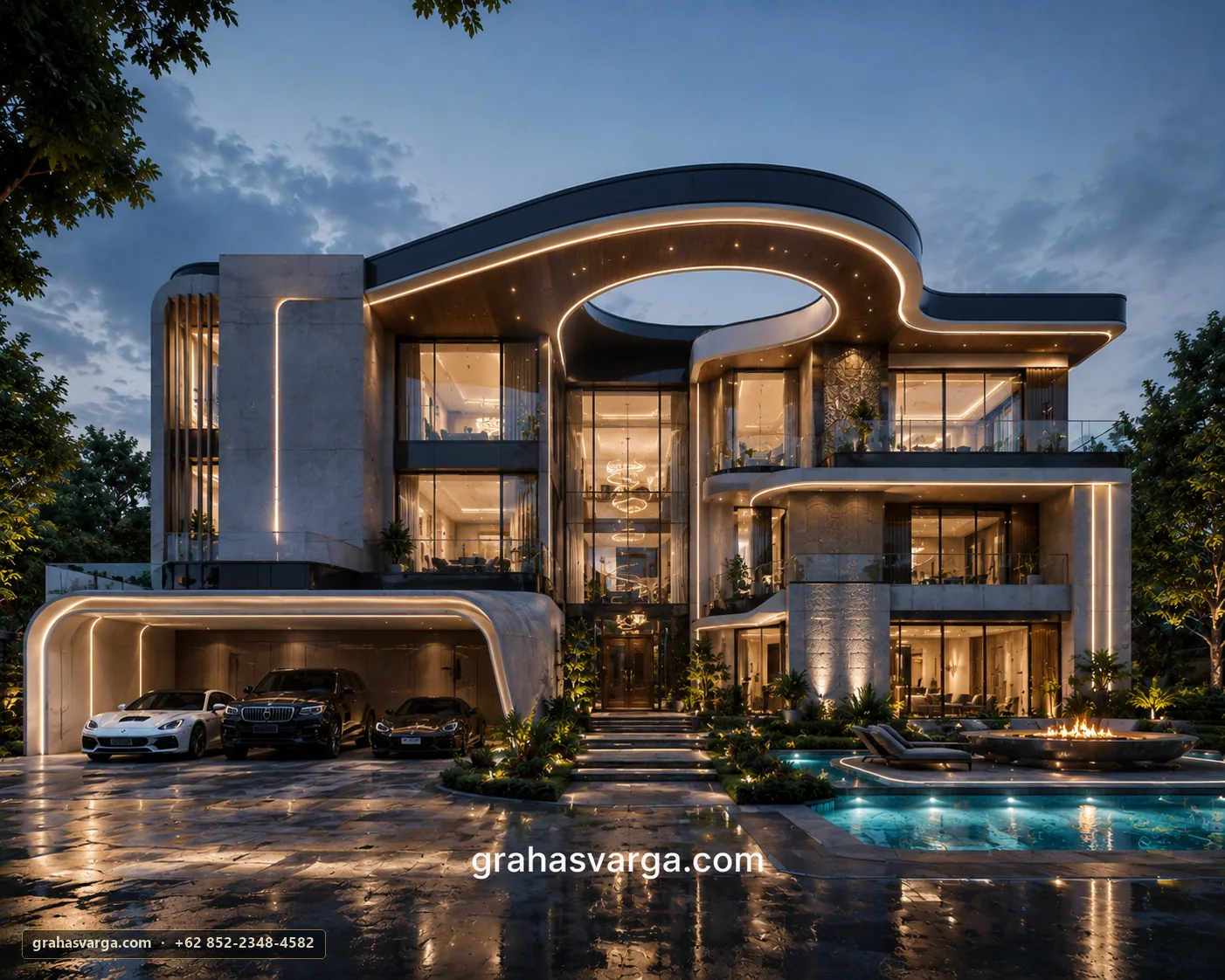
Solar Orientation in Architecture is part of the Graha Svarga Architecture Library—where space, people, technology, construction, and the future are examined as one field of thought.
The Sun Moves; the Building Remains
Solar orientation begins with correct location, north, latitude, season, and time. East and west exposures behave differently, while northern and southern conditions change between hemispheres and locations.
The orientation of the whole building and the orientation of individual rooms are related but not identical. Use at a particular hour may matter more than a simplified rule applied to every space.
Light and Heat Are Not the Same
A large opening can provide valuable daylight and view while also admitting glare and unwanted heat. Performance depends on direction, glass, shading, room depth, surrounding buildings, interior surfaces, and the time of use.
Facades need not be identical on every side. Overhangs, fins, screens, courts, vegetation, and recessed openings should answer specific solar angles rather than become decoration without evidence.
Orientation, Material, and Energy
Solar exposure influences cooling demand, comfort near glass, fading, weathering, roof temperature, and material movement. Early orientation decisions may reduce loads before mechanical systems are selected.
This does not mean sacrificing every view to avoid the sun. A western view, for example, may justify high-performance glazing, external shade, a transitional terrace, or carefully timed use.
Design Across Time
Sun-path diagrams, shadow studies, and simulation help compare decisions, but they do not replace judgement. A building should be tested from inside its rooms, across representative days and hours, not through one attractive exterior image.
The sun is neither enemy nor ornament. It is a changing condition through which architecture develops a relationship with time.
A decision that belongs to the whole building
The practical lesson of solar orientation in architecture is that no architectural decision should remain isolated. Its effect travels into cost, comfort, construction, maintenance, environmental performance, and the character people eventually experience. A responsible design process makes those connections visible early, while alternatives can still be compared without expensive disruption. Graha Svarga uses this wider view to protect both imagination and reality: the idea may remain ambitious, but every line must gradually acquire a reason, a dimension, a material logic, and a place within the life of the building. The result is not a universal formula. It is a more precise conversation—one capable of turning knowledge into an answer appropriate to a particular person, site, climate, and future. It also leaves a traceable basis for later coordination, so specialists can improve the proposal without losing the architectural intention that gave it coherence.
Knowledge is gathered to sharpen decisions and draw architectural possibility into reality.