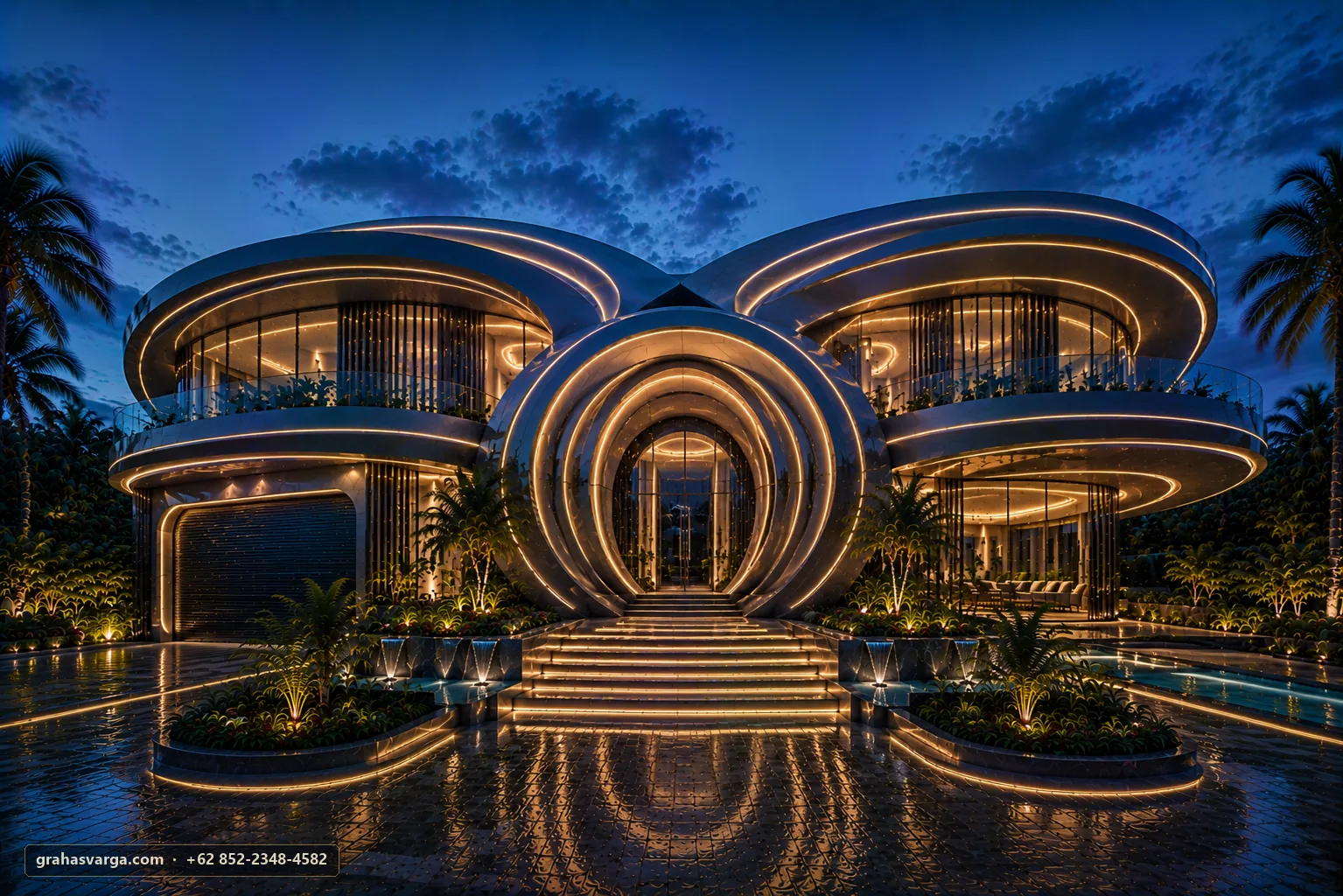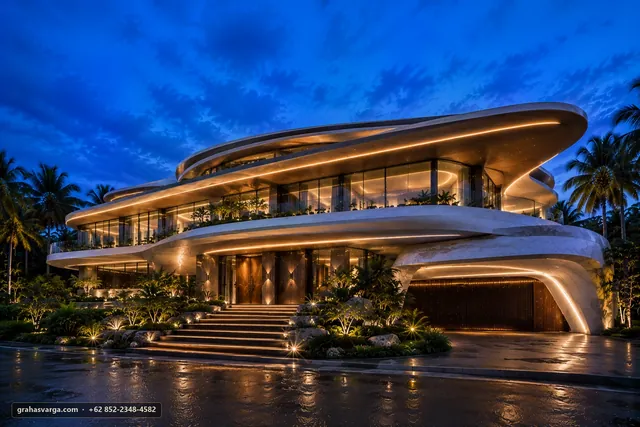
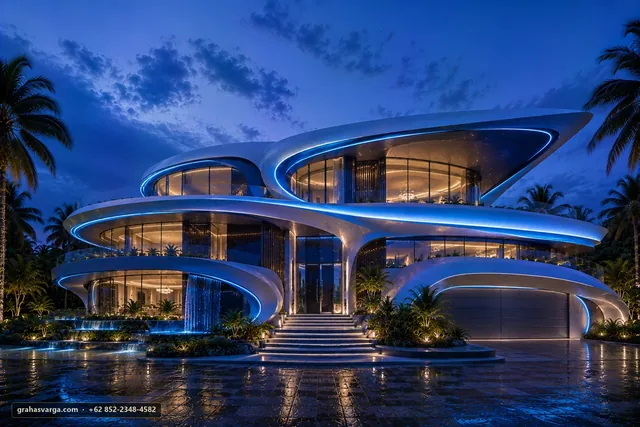
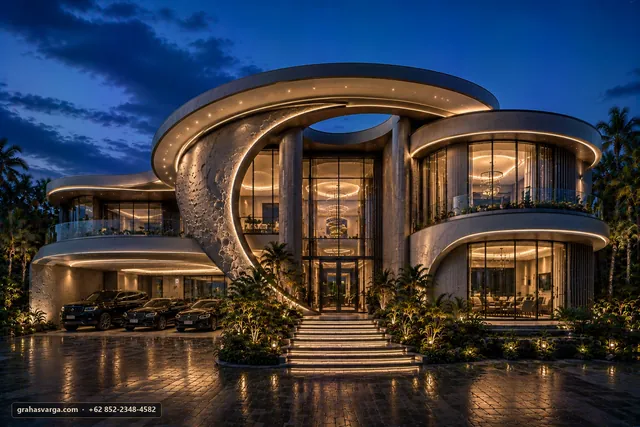
Access and the Experience of Arrival is part of the Graha Svarga Architecture Library—where space, people, technology, construction, and the future are examined as one field of thought.
Architecture Begins Before the Door
Arrival begins at the road, not at the entrance door. Street width, traffic, turning movement, level changes, weather, pedestrian safety, service access, and security shape the approach long before the interior is reached.
A gate marks a boundary, but it is not necessarily the architectural entrance. The journey between them can prepare the eye, slow movement, and protect private life.
Separate Movements with Purpose
Guests, residents, staff, deliveries, waste, and vehicles do not always need the same route. Separating them can improve dignity and efficiency, particularly in villas, estates, hospitality, and complex residences.
Separation should not produce confusion or excessive distance. Turning paths, drop-off, parking, accessibility, visibility, and emergency needs must be tested through real scenarios.
The Threshold
A threshold belongs to two conditions at once: public and private, exposed and sheltered, movement and pause. Canopies, courts, foyers, changes in light, material, sound, and ceiling height can make this transition legible.
Rain and sun must participate in the sequence. A dramatic entrance that leaves people exposed or cannot be found at night has mistaken image for experience.
The First Meeting with Architecture
Arrival can reveal a building gradually through compression and release, framed views, landscape, and controlled light. Yet ceremony should remain appropriate to the building and the people it serves.
Access also influences zoning. Site plan and floor plan should therefore be designed as one continuous experience—from the street to the moment a person feels they have arrived.
A decision that belongs to the whole building
The practical lesson of access and the experience of arrival is that no architectural decision should remain isolated. Its effect travels into cost, comfort, construction, maintenance, environmental performance, and the character people eventually experience. A responsible design process makes those connections visible early, while alternatives can still be compared without expensive disruption. Graha Svarga uses this wider view to protect both imagination and reality: the idea may remain ambitious, but every line must gradually acquire a reason, a dimension, a material logic, and a place within the life of the building. The result is not a universal formula. It is a more precise conversation—one capable of turning knowledge into an answer appropriate to a particular person, site, climate, and future. It also leaves a traceable basis for later coordination, so specialists can improve the proposal without losing the architectural intention that gave it coherence.
Knowledge is gathered to sharpen decisions and draw architectural possibility into reality.