Form, Function, Meaning, and Context is part of the Graha Svarga Architecture Library—where space, people, technology, construction, and the future are examined as one field of thought.
Form: What We See
Form is the most readily recognisable aspect of architecture.
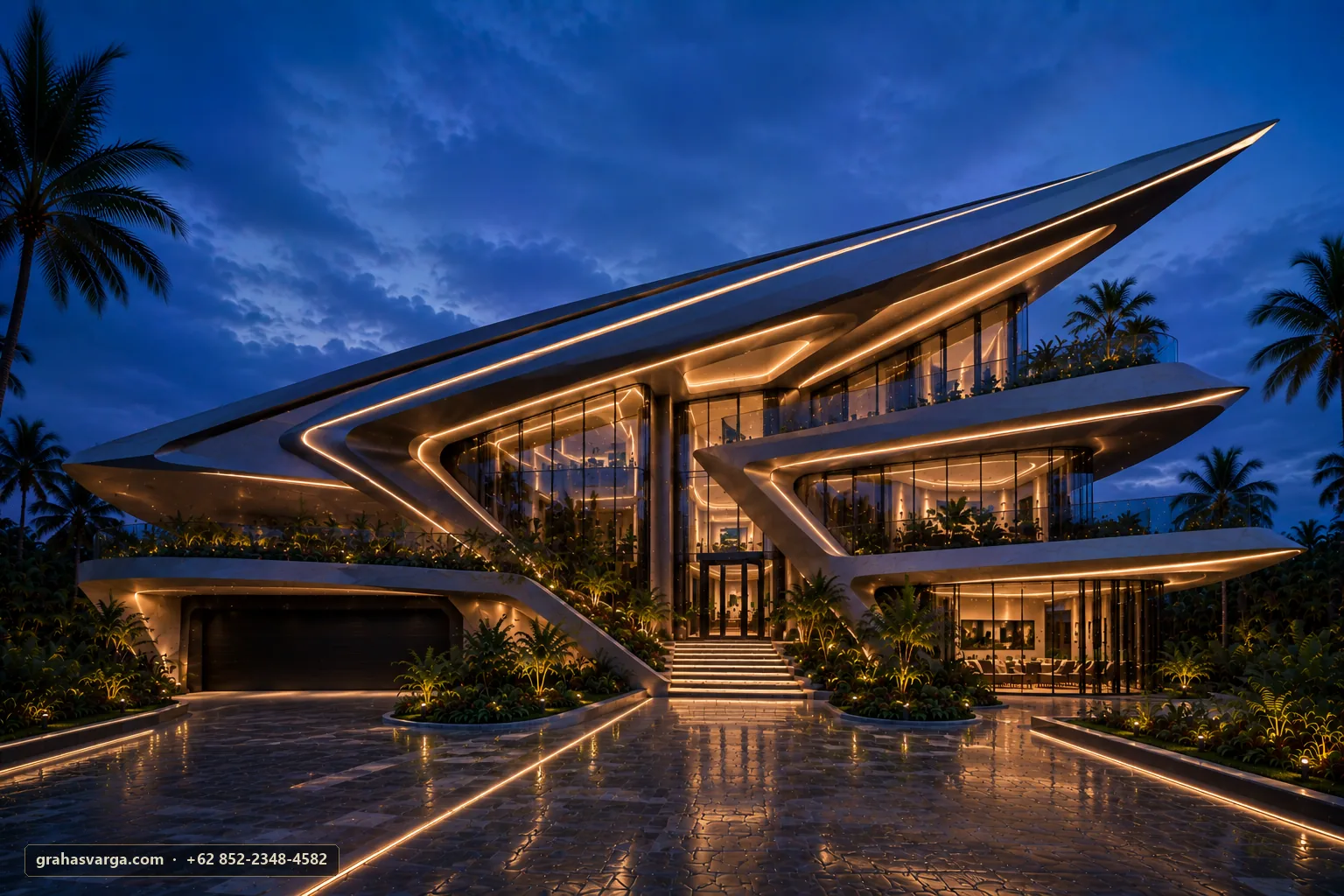
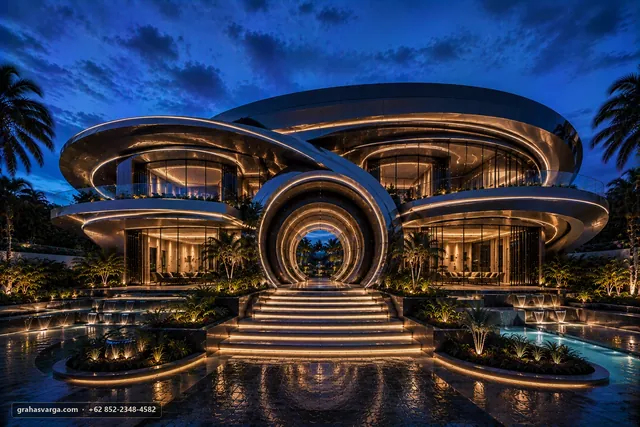
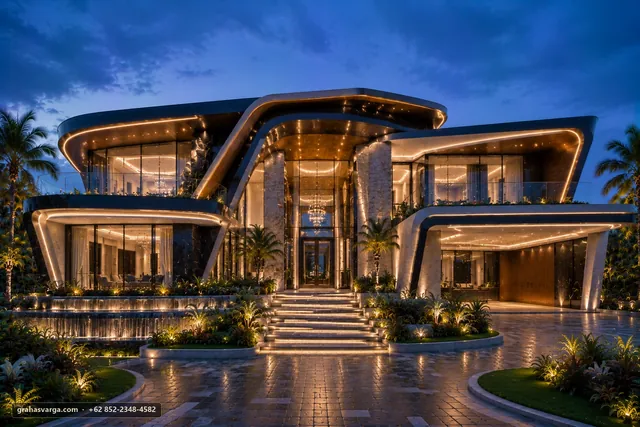
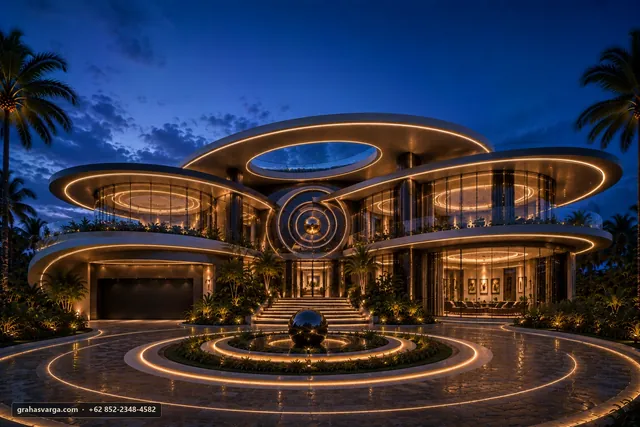
Building mass, lines, planes, roofs, openings, proportions, materials, and façade composition shape the visual identity of a work.
Yet form is not simply a matter of making something look beautiful or different.
Form can arise from many reasons.
A broad roof may take shape in response to rain and sun. A building may extend lengthwise to achieve a particular orientation. A courtyard may emerge from the need for light and ventilation. A building mass may be divided in order to preserve a tree or respond to the contours of the land.
The best form, therefore, is often not one imposed from the beginning, but one that grows from resolving many concerns at the same time.
Form becomes stronger when we can explain why it is there.
Function: How a Building Works
If form answers what is seen, function concerns how a building is used.
In a house, function cannot be adequately explained by a list of rooms.
We need to understand the relationships between those spaces.
How do occupants move from a bedroom to the family room? How do goods enter the kitchen? How are guests received? Do service areas disrupt the principal spaces? Can someone work while other family members are active elsewhere?
A floor plan containing every required room is not necessarily a good floor plan.
Mature function emerges when space supports life naturally, so that occupants are not continually forced to adapt themselves to the building's weaknesses.
Function, therefore, is really about the relationship between space and life.
Meaning: Why a Building Matters
People do not always experience buildings rationally.
A home can mean safety. A courtyard can remind someone of their childhood home. A particular material can evoke a connection with a region. A dining room can become the centre of family life even if it is not the largest room.
Architecture can also carry meaning at the scale of society.
Government buildings, places of worship, monuments, traditional houses, museums, and public spaces often become part of the identity of a community and an age.
Yet meaning does not always have to be expressed through an obvious symbol.
It may emerge through the way a building treats nature, preserves something that already exists, organises family relationships, or creates a particular atmosphere.
Even a highly modern house can maintain a profound connection with the life of its owner when its architectural decisions arise from the people who will live there.
Meaning makes a building more than an object.
Context: Where a Building Stands
No building truly stands in a vacuum.
Every building has a context.
The most readily recognised context is physical: the shape of the land, sun, wind, rain, temperature, vegetation, views, roads, density, and surrounding buildings.
But context may also include culture, history, technology, economics, regulations, social customs, and the way people live in a particular age.
A tropical house in Indonesia faces different conditions from a house in a region with long winters. A villa on a hillside requires a different approach from a house in a dense city. A house for a family that values privacy deeply cannot be treated in the same way as one that receives many guests every day.
This is why copying a design wholesale from another place often creates problems.
The building may look the same.
But the sun is different, the rain is different, the ground is different, the culture is different, and the people are different too.
Architecture that understands context does not merely stand in a place. It has a relationship with that place.
When the Four Come Together
Form, function, meaning, and context are not four separate boxes working independently.
A single decision can touch all of them at once.
Imagine a house with a central courtyard.
In terms of form, the courtyard creates a void between the building masses.
In terms of function, it can help connect several spaces.
In terms of context, the courtyard can bring light and air into the interior of a tropical house.
In terms of meaning, it may become a place where the family gathers and, eventually, the centre of the home's memories.
One architectural decision creates several layers at once.
This is where a design begins to acquire depth.
Conversely, problems arise when one aspect dominates without considering the others.
A form that pursues attention may sacrifice function. Function understood too mechanically may produce spaces without quality. Meaning that is forced may become shallow symbolism. Meanwhile, ignoring context can make a building feel alien to its own place.
Architecture does not always require the same balance in every project, but every decision needs to understand its consequences.
There Is No Single Formula
There is no percentage stating that a building must consist of 25 per cent form, 25 per cent function, 25 per cent meaning, and 25 per cent context.
Every project presents different questions.
In a small house within a dense city, function and privacy may be the principal concerns. In a museum, experience and meaning may receive greater attention. In a building within an extreme environment, responses to climate and structure may strongly determine its form.
The task of design is not to divide everything into equal portions.
Its task is to find the right relationship for the particular problem being addressed.
This is why architecture cannot be resolved entirely through recipes.
It requires knowledge, observation, dialogue, testing, and decisions.
Architecture as a Whole
When a building succeeds, we often cease to see form, function, meaning, and context as separate parts.
Its form feels logical because it arises from need.
Its function feels natural because it understands people.
Its materials and spaces possess character without having to explain themselves too insistently.
And the building feels as though it truly belongs in that place.
In such a condition, architecture no longer appears as a collection of competing decisions.
It feels like a coherent whole.
Form gives architecture its presence. Function gives it usefulness. Meaning gives it depth. Context gives it a place in which to stand.
When all four understand one another, the building no longer exists merely as an object.
It becomes part of the life, place, and age that brought it into being.
Knowledge is gathered to sharpen decisions and draw architectural possibility into reality.